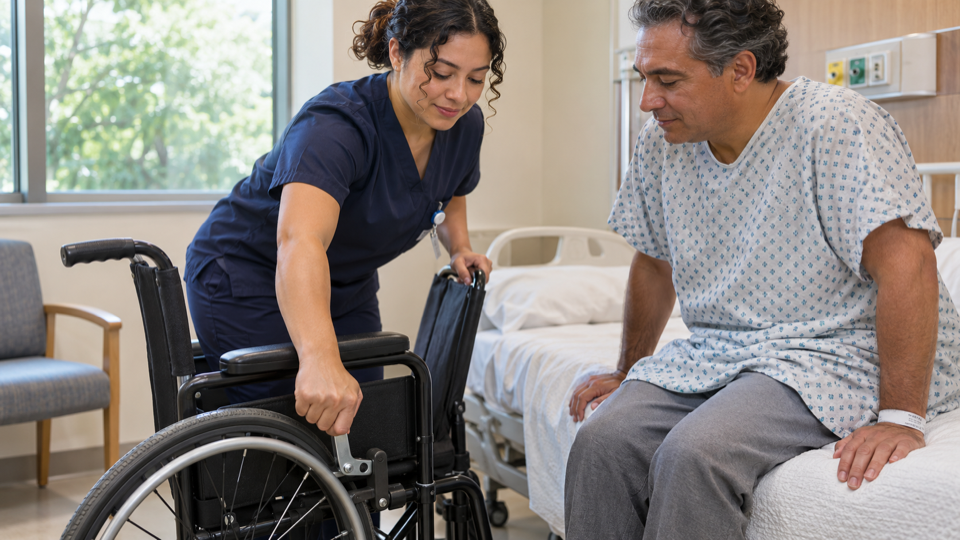
Every transport has a few moments where things can go wrong quickly. A patient stands up from the bed to sit in a wheelchair. A stretcher is moved next to an imaging table. A patient who seemed steady on the unit feels dizzy halfway down the hallway. These are the moments when falls happen, and patient transporters are often the only staff member in the room when they do.
Falls are one of the most common safety events in hospitals. That makes fall prevention part of every transporter's job, not just a nursing responsibility. This article covers simple, repeatable habits transport teams can build so every trip starts and ends safely. Always follow your facility's fall prevention policy and the direction of the care team. The habits below are meant to support that policy, not replace it.
Why Falls Matter for Transport Teams
The numbers are large. According to the Agency for Healthcare Research and Quality (AHRQ), each year somewhere between 700,000 and 1,000,000 people in the United States fall in the hospital. Even a fall without a serious injury can frighten a patient, lengthen a stay, and shake a family's trust in the hospital.
Transport is a high-risk time because it involves movement. Patients change position, leave a familiar room, and travel through busy hallways and elevators. Many are tired, in pain, or recovering from a procedure. A transporter who knows where the risks are can help keep those moments calm and controlled.
Know the Patient Before You Move
The safest transports start before anyone touches the patient. Before you enter the room, take a moment to gather what you need to know.
- Check the request for any fall risk flag or special instructions.
- Look for fall risk signs your facility uses, such as a colored wristband, door sign, or bed alarm.
- Ask the nurse a short, direct question: "Is there anything I should know about moving this patient?"
- Confirm whether the patient can stand, needs help, or must not stand at all.
If anything is unclear, ask before you start. A short pause on the unit is always better than a fall in the hallway. Decisions about how much help a patient needs belong to the care team, so when in doubt, follow their direction and your facility's policy.
Prepare the Equipment Every Time
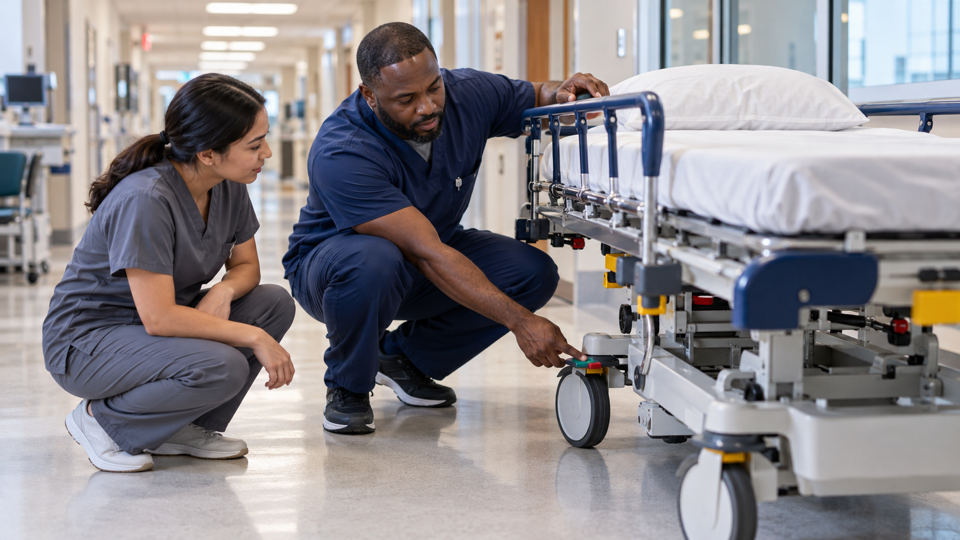
Many transport falls are linked to equipment that was not ready. A wheelchair that rolls when the patient sits down, or a footrest that catches a foot, can turn a simple transfer into an incident.
Build a short equipment habit into every trip:
- Lock the brakes on the wheelchair or stretcher before any transfer.
- Move footrests out of the way while the patient sits or stands, then put them back before you move.
- Check that side rails and safety belts work and are used as your policy requires.
- Look at the wheels and frame for anything that seems loose or damaged.
- Take any damaged equipment out of service and report it the way your department requires.
This takes less than a minute, and it should happen on every transport, even the ones that feel routine.
Communicate With the Patient at Every Step
Patients are less likely to make a sudden, unsafe move when they know what is coming. Clear, calm communication is one of the simplest fall prevention tools a transporter has.
- Introduce yourself and explain where you are going.
- Tell the patient what you will do before you do it, such as "I am going to lock the brakes, and then we will help you sit."
- Ask the patient to wait for you instead of standing up on their own.
- Check in during the trip. Ask if they feel dizzy, cold, or uncomfortable.
If a patient says they feel faint or unwell during a transport, stop in a safe place and get help according to your facility's policy. Do not try to manage a medical change on your own.
Watch the Environment on the Route
Hallways, doorways, and elevators all carry their own risks. A wet floor, a crowded corridor, or an elevator that stops slightly above or below the floor can all cause problems.
Keep an eye on:
- Wet floor signs and spills. Report hazards to EVS when you see them.
- Thresholds and elevator gaps. Slow down and cross them carefully.
- Tight corners and busy areas, where you may need to stop and wait.
- The arrival point. Make sure the receiving area is ready before you start the transfer.
A transporter who notices hazards and reports them helps the whole hospital, not just the patient in the chair.
Hand Off Safely at the Destination
The trip is not over when you arrive. Many falls happen at the destination, when the patient is moved to a bed, chair, or exam table, or left alone for a few minutes.
At handoff, tell the receiving staff about any fall risk you know about. Follow your facility's process for transfers, and do not leave a patient unattended in a hallway or waiting area if your policy says they need supervision. Before you leave, make sure the patient knows how to call for help.
Build Fall Prevention Into Training
Habits only last when they are taught the same way to everyone. Transport departments that treat fall prevention as a core skill, rather than a one-time orientation slide, tend to see more consistent practice across shifts.
The Certified Healthcare Transporter (CHT) credential gives transporters a shared standard for safe patient handling, equipment checks, and communication. Departments that want to keep training going after orientation can prepare their own experienced staff to teach through the Certified Healthcare Transporter Instructor (CHTI) program. When trainers are on every shift, safe habits are reinforced every day, not just once a year.
A Simple Place to Start
Pick one habit from this article and make it a team standard this week. For many departments, the easiest start is "brakes locked before every transfer, every time." Talk about it at the next shift huddle, watch for it on the floor, and recognize team members who do it well.
Small habits, repeated on every transport, are what keep patients safe. Each trip that ends without a fall is a sign that the team's routine is working.
Sources
- Agency for Healthcare Research and Quality, "Falls Prevention": https://www.ahrq.gov/topics/falls-prevention.html